Python vs LabVIEW: what 1,021 hardware test job postings ask for
By Alex Hernandez · · 11 min read
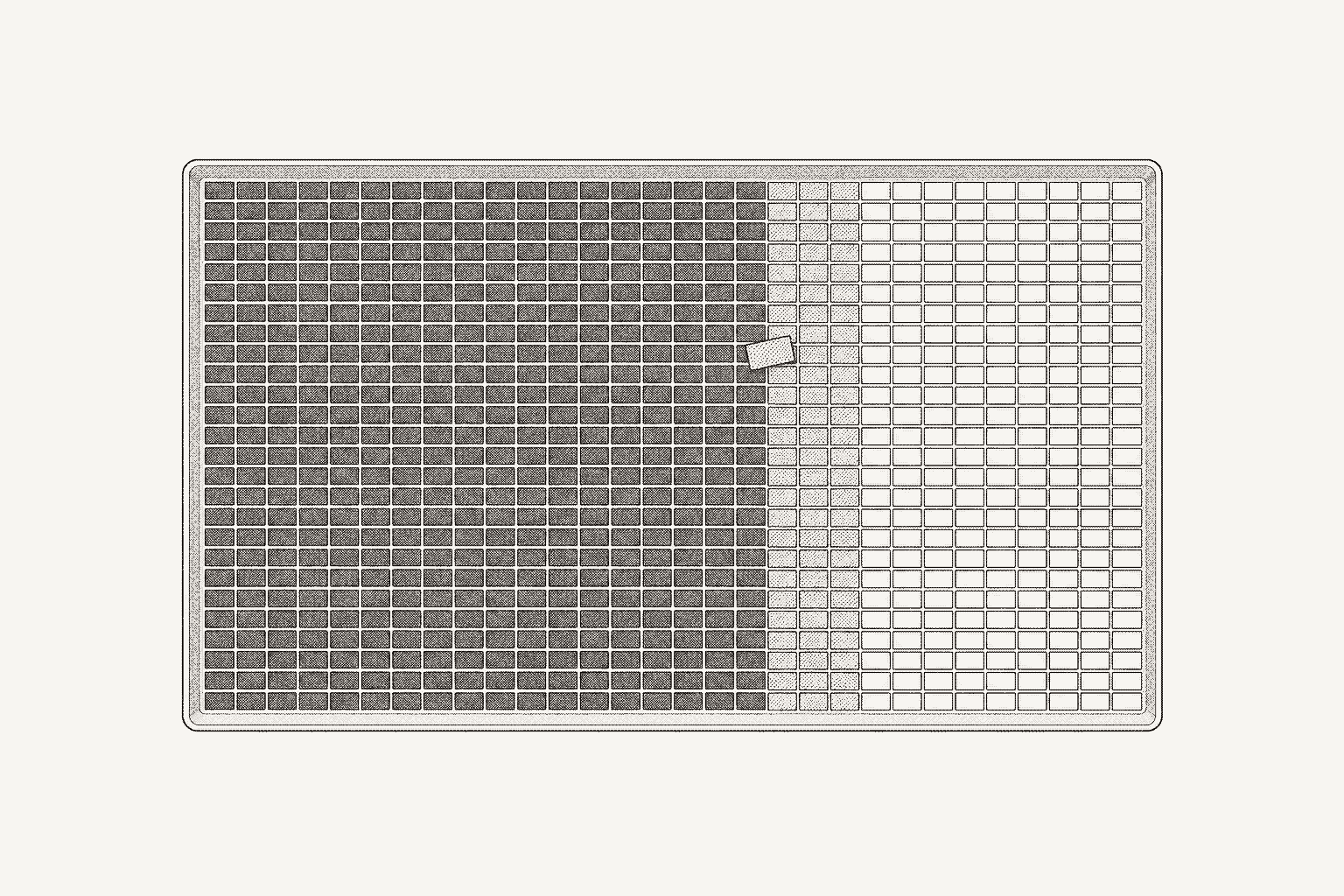
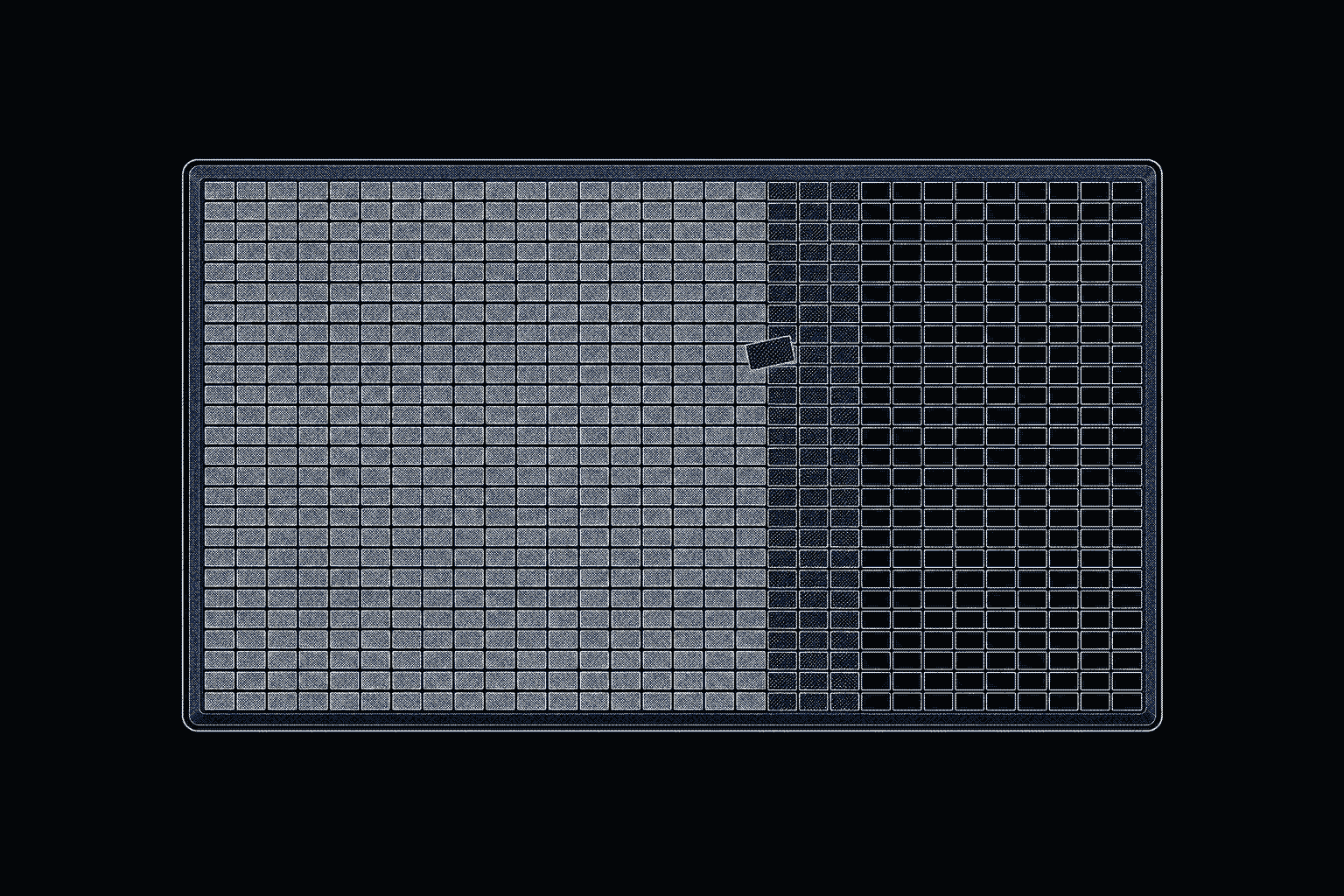
We analyzed 1,021 hardware test job postings collected in July 2026 from the applicant-tracking boards of 70 hardware companies. Python appears in 54.8% of them (560 postings) and LabVIEW in 7.1% (72). Only 4 postings, 0.4%, name LabVIEW without also naming Python. These are skills listed on job ads, not measurements of what engineers use.
Headline numbers
- Python: 54.8% of hardware test postings (560 of 1,021), close to eight times LabVIEW's count.
- LabVIEW: 7.1% (72 of 1,021). Of those 72 postings, 68 also name Python.
- LabVIEW without Python: 0.4% (4 of 1,021).
- TestStand: 1.0% (10 of 1,021).
- Instrument-control protocols: under 2%. GPIB, SCPI and VISA appear in 13, 5 and 1 postings, and fewer than 20 of the 1,021 name any instrument-control protocol at all.
- Instrument plus language: 9.2% of engineering-titled postings (620 of 6,711) name both a bench instrument and a programming language. Across every posting with text, the figure is 5.8% (679 of 11,639).
Tools named in hardware test postings
The chart shows the share of the 1,021 hardware test postings whose text names each tool at least once. A posting can name several tools, so the bars do not sum to 100%. The scale runs to 100% so Python's bar reads as what it is: a majority, not a universal requirement.
- Python54.8%
- LabVIEW7.1%
- GPIB1.3%
- TestStand1.0%
- NI PXI/DAQ/cRIO1.0%
- SCPI0.5%
- VISA0.1%
Source: Galois hiring study, July 2026
The same figures as counts:
| Tool or term | Postings | Share of 1,021 |
|---|---|---|
| Python | 560 | 54.8% |
| LabVIEW | 72 | 7.1% |
| GPIB | 13 | 1.3% |
| TestStand | 10 | 1.0% |
| NI PXI, DAQ or cRIO | 10 | 1.0% |
| SCPI | 5 | 0.5% |
| VISA | 1 | 0.1% |
| LabVIEW without Python | 4 | 0.4% |
| Any instrument-control protocol | fewer than 20 | under 2% |
Source: Galois hiring study, July 2026
Below Python and LabVIEW, every row rests on 13 postings or fewer. At those sizes one employer's posting template can move a figure by a large fraction of itself, so read the bottom of the table as an order of magnitude, not a ranking. TestStand and NI hardware tie at 10 postings each, and the tie means nothing beyond "about one posting in a hundred."
Python is the default
Python is the only tool named in a majority of the postings: 560 of 1,021. It outnumbers LabVIEW 560 to 72, and more postings name Python than name every other tool in the table combined. Among the companies we tracked, a hardware test posting is more likely than not to ask for Python.
Two cautions apply. First, a keyword match cannot tell how a posting uses the word: "Python for test automation," "Python for data analysis" and "familiarity with Python a plus" all count the same. Second, 461 postings (45.2% of 1,021) do not name Python, and only 4 of those name LabVIEW. That leaves 457 postings, 44.8% of the set, that name neither. We did not break down what they ask for instead, so this post makes no claim about them.
LabVIEW almost never appears without Python
LabVIEW appears in 72 postings, 7.1% of the 1,021. In 68 of those 72 (94%), Python appears in the same posting. Only 4 postings ask for LabVIEW and not Python: 0.4% of the hardware test set.
In the companies we tracked, then, LabVIEW shows up next to Python rather than as the only language of the role. That is consistent with benches where established LabVIEW code runs alongside newer Python, but a posting cannot confirm it. Listing both tells us neither which one the team uses more nor whether the LabVIEW line describes existing code or a wish.
TestStand, NI's test sequencer, appears in 10 postings (1.0%). NI's PXI, DAQ or cRIO hardware is named in 10 (1.0%). Both counts are small enough that a single employer's habits could account for much of either.
None of this says LabVIEW is going away. Seventy-two postings in one month is real demand. If LabVIEW is more common at older, larger manufacturers, a hypothesis this data cannot test, those are the companies this sample covers least (see limitations). Teams weighing what to do with existing LabVIEW or TestStand code can start with our LabVIEW comparison, the TestStand comparison, and a phased LabVIEW-to-Python migration plan.
Protocol plumbing is assumed, not listed
Between a test script and a bench instrument sit a few layers. GPIB is the IEEE 488 instrument bus. SCPI is the text command language most programmable instruments accept, whether over GPIB, USB, LAN or serial. VISA is the standard I/O interface that most instrument code calls to reach them. These are the terms that describe how code talks to an instrument.
They almost never appear in these postings. GPIB is named in 13 (1.3%), SCPI in 5 (0.5%) and VISA in 1 (0.1%). Fewer than 20 of the 1,021 postings, under 2%, name any instrument-control protocol at all.
The postings ask for a language, and sometimes for instruments, but rarely for the layer that connects the two. The data cannot say why. The protocol layer may be assumed knowledge, taught on the job, or hidden behind libraries and drivers. All three explanations predict the same job posting, so this study cannot separate them. What it does show is that, in the companies we tracked, a posting is a poor place to look for evidence of protocol skills. Our guide to SCPI instrument automation with Python covers that layer directly.
About one in eleven engineering postings pairs an instrument with a language
This finding uses a wider set than the 1,021. Of the 11,639 postings with full text, 6,711 have an engineering title: engineer, technician, scientist or developer, excluding recruiting, legal, sales, marketing, finance, purchasing, planning and program-management titles. Of those 6,711, 620 name at least one bench instrument and at least one programming language. That is 9.2%, about one in eleven. Across all 11,639 postings with text, including non-engineering roles, the figure is 5.8% (679 postings), about one in seventeen. Both term lists are in the method.
Naming both is weak evidence that a role drives instruments from code, but it is a useful bound. Even with a generous definition, where MATLAB counts as a language and "lab equipment" counts as an instrument, fewer than one engineering posting in ten pairs the two. The 9.2% is also more likely too high than too low for hardware engineering as a whole. Four companies, Anduril, SpaceX, Shield AI and Relativity Space, supply 47% of the 6,711-posting denominator, and the corpus as a whole leans toward instrument-heavy, venture-backed hardware companies. We treat 5.8% as a floor and 9.2% as an upper bound for this corpus, not as an estimate for all engineers.
What it means for test teams
These results describe what the companies we tracked asked for in one month. They support calibration, not prediction, and say nothing about which tool is better for a given bench.
Python is the shared vocabulary. It is the one term most of these postings have in common. A posting that asked for LabVIEW alone was rare: 4 of 1,021.
LabVIEW appears alongside Python, not instead of it. Teams on LabVIEW or TestStand are not alone; 72 postings asked for LabVIEW in a single month. But nearly all of them asked for Python too. The planning case these postings point to is a mixed bench, where both are maintained and handed over, not a clean choice between them.
The protocol layer goes unnamed. If your bench depends on someone who can read a SCPI command reference or debug a VISA session, expect to check for that skill or teach it, because postings rarely name it.
Instrument code is a minority skill. If postings are a fair guide, the engineers who write bench code are a small group inside a larger team that relies on what the bench produces. Test records that only their authors can read leave most of that team out.
We have a stake in this question. Galois is agent-driven test engineering for hardware teams: agents generate tests and instrument drivers, run them on real benches through the open-source galois-edge daemon, and turn the results into reports and a shared engineering record. Its instrument control is Python-native, which is one reason we publish the method and its weaknesses in full below rather than only the headline. For how agents fit into a Python test workflow, see AI test automation for hardware benches.
Method
| Stage | Postings |
|---|---|
| Collected from 70 company ATS boards, July 2026 | 20,195 |
| With full posting text | 11,639 |
| Engineering-titled, with text | 6,711 |
| Hardware test titled, with text | 1,021 |
Sources. In July 2026 we collected job postings from the public applicant-tracking-system (ATS) boards of 70 hardware companies. Each record holds the company, an industry tag, the ATS, and the posting's title, URL, location, publish date and text. Industry tags span defense, space, aviation, EV, battery and energy, medical devices, robotics and autonomous vehicles, semiconductors, and consumer and industrial hardware. The collection holds 20,195 postings.
Text coverage. 11,639 of the 20,195 postings (57.6%) carry full text. Nine boards returned titles but no text: the Workday boards of NVIDIA, Abbott, Blue Origin, Stryker, Medtronic, Insulet and Marvell; Boston Dynamics, also on Workday; and Rivian, through its custom careers API. Postings on those nine boards count toward the 20,195 but contribute nothing to any text-based figure in this post.
Hardware test classifier. A posting is a hardware test posting if its title names a hardware test role: test, validation or verification titles, plus compliance and EMC, hardware-in-the-loop (HIL), reliability and qualification, and ATE or bring-up titles. Software-QA titles (QA, SDET, software test, quality assurance) are excluded. The rule does not require the words engineer or technician. 1,021 matching postings carry full text. They are the denominator for every tool share.
Engineering classifier. For the instrument-and-language finding, a posting is engineering-titled if its title contains engineer, technician, scientist or developer and none of: recruit, sourcer, talent, counsel, attorney, account executive, sales, marketing, financial analyst, accountant, buyer, planner, or technical program manager. 6,711 postings with full text pass.
Keyword matching. Tool mentions are case-insensitive matches against the posting text. A posting counts once for a tool however many times the tool appears, and a posting that names several tools counts toward each. For the instrument-and-language finding, the instrument terms are oscilloscope, DMM, multimeter, power supply, spectrum analyzer, network analyzer, source meter, SMU, data acquisition, DAQ, GPIB, SCPI, PyVISA, function generator, arbitrary waveform, electronic load, thermal chamber, environmental chamber, battery cycler, PXI, bench instrument, bench equipment and lab equipment. The language terms are Python, LabVIEW, MATLAB, C++, C#, Tcl, Perl, Rust, Java and Golang. A posting counts if its text matches at least one term from each list.
Unit of analysis. The posting, not the company or the person. A company with many open test roles contributes many postings, and no figure is weighted by company.
Concentration. Anduril, SpaceX, Shield AI and Relativity Space together supply 47% of the 6,711 engineering-titled postings. That is the set we measured concentration on. We have not reported the same breakdown for the 1,021 hardware test postings, and readers should not assume the smaller set is less concentrated.
Derived figures. Figures not in the recorded outputs, such as 68 of 72 LabVIEW postings naming Python, are computed here from the recorded counts and shown with their denominators.
Limitations
Skills mentions, not measured usage. A job posting is a request written by a hiring manager or recruiter. It can list legacy tools, aspirational ones, or a template carried over from another role. It says nothing about how many hours anyone spends in a tool or whether the person hired ever touches it. Nothing here measures what engineers do at a bench.
Venture-backed hardware skew. The 70 companies lean toward venture-backed hardware, and four of them supply 47% of the engineering-titled denominator. Several of the largest established companies in the set (NVIDIA, Medtronic, Stryker, Abbott) are among the nine text-less boards, which tilts the text-based figures further toward venture-backed firms. Four of those nine boards are medical-technology companies and two are chipmakers, so both industries are thin in every text-based count. Open postings are also a hiring flow, not a headcount: fast-growing companies carry more weight than their share of working test engineers.
One-month snapshot. All postings were collected in July 2026. This study cannot show a trend. It does not say Python is growing or LabVIEW is shrinking, only what was asked for in that month.
Keyword false positives and negatives. Matching words is not reading. "Python" counts whether it means test automation or a data-analysis nice-to-have, and "lab equipment" and "DAQ" are broad. Some terms collide with ordinary English: a pattern loose enough to catch every mention of VISA would also catch "visa sponsorship," and in the language list "Rust" also matches corrosion. In the other direction, the C# pattern as written misses most mentions of C#, and a posting that describes the work ("automate bench measurements") without naming a tool is missed. We have not measured the size of any of these effects.
A title rule. The hardware test rule is a title filter. It misses test work done under general titles, such as hardware or manufacturing engineer, and it admits some titles that are not bench work, such as pre-silicon design verification, which is simulation.
Small counts. Below Python and LabVIEW, every tool count is 13 postings or fewer. Even the Python share is less precise than its decimal suggests: if postings were independent random draws, sampling error alone would be about ±3 percentage points at 95% confidence (n = 1,021). They are not independent, because postings cluster within companies and share templates, so the real uncertainty is wider.
Citing this study
Galois Labs, "Python vs LabVIEW: what 1,021 hardware test job postings ask for," July 2026 study of 70 hardware company ATS boards, galoislabs.ai/blog/hardware-test-hiring-study. Please cite each share with its denominator: tool shares are of 1,021 hardware test postings; instrument-and-language shares are of 6,711 engineering-titled postings or 11,639 postings with text.
Frequently asked questions
- Is LabVIEW still used in industry?
- Yes, and job postings still ask for it. In our July 2026 study of 1,021 hardware test job postings from 70 companies, 72 postings (7.1%) named LabVIEW and 10 (1.0%) named TestStand. LabVIEW rarely appeared on its own: only 4 postings (0.4%) named LabVIEW without also naming Python. The sample leans toward venture-backed hardware companies, so it may not reflect older, larger manufacturers.
- Is Python replacing LabVIEW for test automation?
- This study cannot show replacement, because it is a one-month snapshot rather than a trend. What it shows is that in July 2026, Python appeared in 54.8% of the hardware test postings we analyzed and LabVIEW in 7.1%, and that 68 of the 72 LabVIEW postings also named Python. In these postings LabVIEW sits next to Python, not instead of it.
- How was this data collected?
- We collected 20,195 job postings from the public applicant-tracking boards of 70 hardware companies in July 2026; 11,639 had full text. A title rule for hardware test roles (test, validation and verification titles plus compliance, EMC, HIL, reliability and bring-up titles; software QA excluded) selected 1,021 postings with full text, and case-insensitive keyword matching on their text counted tool mentions, once per posting.
Bring Galois to your bench.
The daemon is Apache-2.0, free forever. Enterprise runs in your cloud or on-prem.